Research
Uncrewed System Observations of the Air-Sea Transition Zone
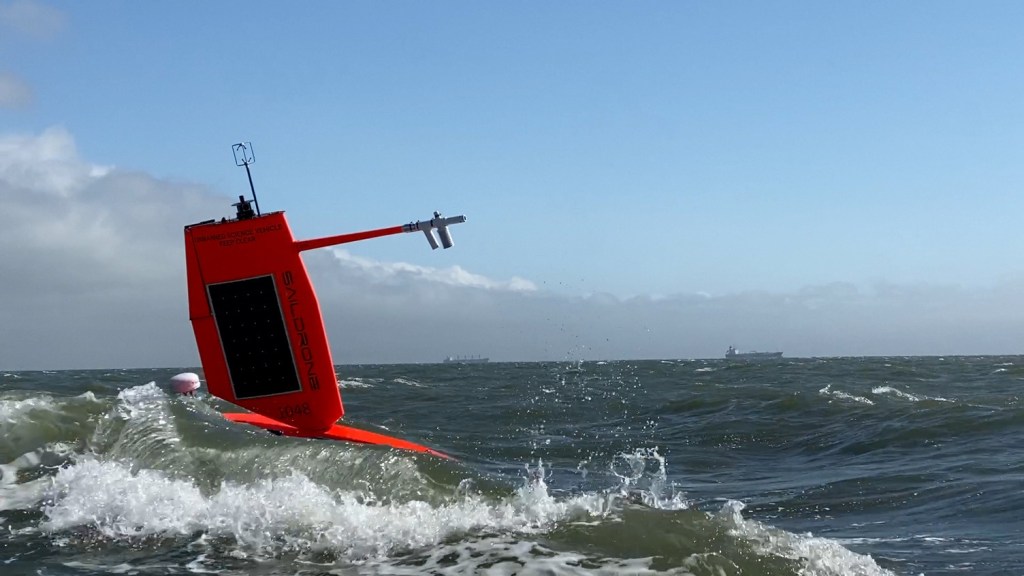
As part of my postdoctoral research, I am a member of the NOAA saildrone project, which pioneers observations by uncrewed systems in tropical cyclones. I developed a virtual simulator of saildrone motion that can be applied to fully-coupled numerical simulations to design, test and assess process-specific measurement strategies. I also contribute to the NOAA Voyager mission which aims to collect unprecedented oceanographic observations in the Arctic using saildrones.
Airborne Tropical Cyclone Observations
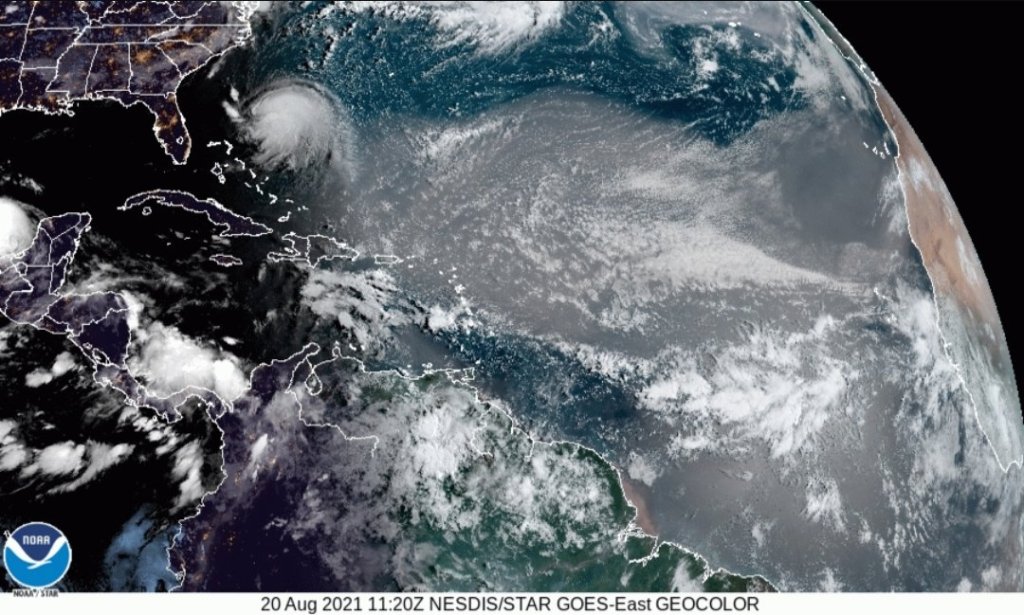
Tropical cyclones spend the vast majority of their lives out in the open ocean, as such direct measurements of their properties typically require airplane missions. Recent technological progress provided us with the opportunity to expand our ability to sample the structure of tropical cyclones. In my research I exploit airborne wind and aerosol lidar instruments to understand the genesis of tropical cyclones in complex environments and their interaction with dry-dusty air intrusions (see a recent Saharan Air Layer outbreak as shown by the GOES-East satellite). I was part of three NASA-led field campaigns, starting from CPEX (2017), CPEX-AW (2021) and CPEX-CV (2022), where I served a lead flight scientists for two missions.
North Atlantic Tropical Cyclone Activity and Climate Variability
The number and location of tropical cyclones in the North Atlantic basin change drastically from year to year. Understanding the spatial patterns of tropical cyclone activity is crucian in order to improve risk assessments and preparedness. In my research, I use historical datasets and remote-sensing products to investigate how climate variability affects tropical activity and rainfall across the North Atlantic basin on interannual timescales, with a particular interest on the role of the North Atlantic Oscillation on the coupled atmosphere-ocean system.
Tropical Cyclone Rainfall – Observation Uncertainty
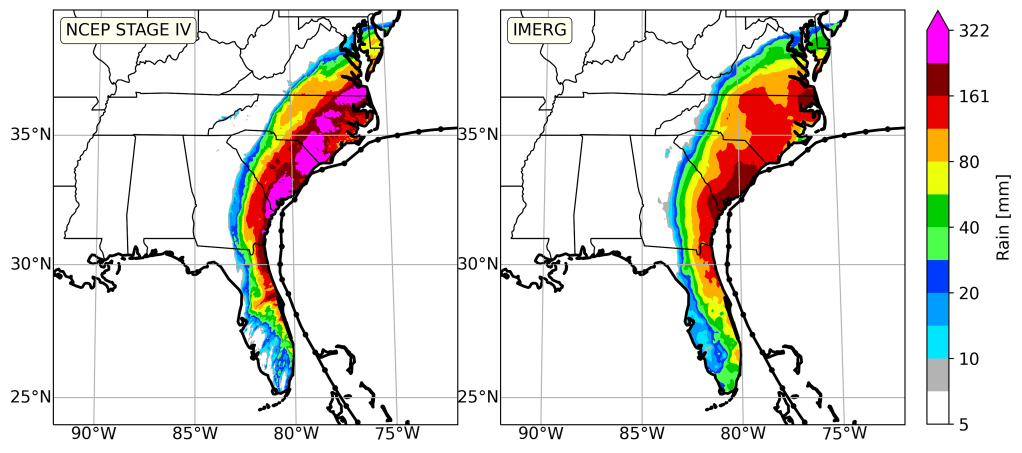
Remote sensing instruments, such as radars and satellites, allow us to estimate the amount of rainfall produced by tropical cyclones over the last two decades. Such estimates, however, differ significantly (see the example of Hurricane Matthew, 2016), limiting our ability to understand risk exposure and future changes in a warming climate. In my research I strive to systematically characterize the variability in TC rainfall among different observational products from three important standpoints: individual storm rainfall verification, extreme rainfall events and TC rainfall climatology.
 edoardomazza.org